

Description
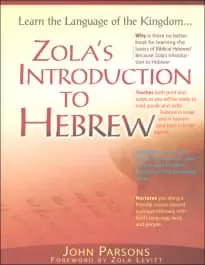
More than half of the Bible is written in Hebrew. For Biblestudy purposes alone, this fact warrants learning the language. This text,originally intended for an adult audience at Bible colleges and seminaries,emphasizes the correct pronunciation and reading of Hebrew words and phrases.Hebrew is complex and this text does not formally introduce grammaticalconcepts, nor does it follow a direct, traditional language learning method.The primary goal is to equip learners to read and comprehend written textrather than communicating in Hebrew.
The first 6 chapters introduce each consonant letter of thealphabet. Since vowels are not delineated in the Hebrew alphabet, theadditional 6 chapters teach the vowels as classes. As you’re learning to writethe letters, you may want to provide your students with additional graph paperfor writing practices, such as this 1 centimeter option.
Then, by lesson 13 (starting as Jewish children do) studentswill learn to read the 3 parts of the Shema in Hebrew and thenwork through the Ten Commandments, The Sabbath and other blessings, as well as dailyworship prayers and blessings.
The author, John Parsons, recommends following this patternwhen studying the lessons: pray, review daily (30 minutes per day); use graphpaper to practice the letter forms and make flash cards.
Each of the 12 lessons in Part I should take one week perlesson for your motivated high school student. Lessons in Part II may bestudied and reviewed for months to come. The readings in Lessons 12 through 16provide the Hebrew writing with a transliteration and then an Englishtranslation below. Background information and cultural explanation elaborate oneach text.
Lesson 17 explains the Tanakh (the full Torah, Prophets, andThe Writings) and the Brit Chadashah (New Testament), followed by Scripturesamples in Hebrew with the corresponding Scripture in English KJV. While notransliteration or direct translation is included at this point, the studentshould be able to pronounce these. A good Strong’s Concordance would solve theword for word translation. Lesson 18 discusses the Hebrew names of God withtransliteration and definitions, with an in-depth discussion on 18 specificnames.
The wealth of language, as well as Biblical and culturalinformation here is astounding. Even if you do not wish to read full documentsin Hebrew, this text would be an excellent source for Bible study or inpreparation for a trip to Israel. Additional resources include an in-depthHebrew Glossary and a bibliography. 6th edition Copyright 2017. 412 pgs, pb.~Ruth